
Explaining the Latest Sonnet
Finally, now I shall comment on the much anticipated and deferred Sonnet. The latest Sonnet I will now explain with annotation will be the Sonnet titled ‘Views do deceive with their bodies and hearts’. This Sonnet has been explained to some degree when it had been written but a more detailed view on puns and other rhetorical devices will now be construed. The subject at hand which is the ‘View’ in turn is my illustration of what I thought I had with Jewell.
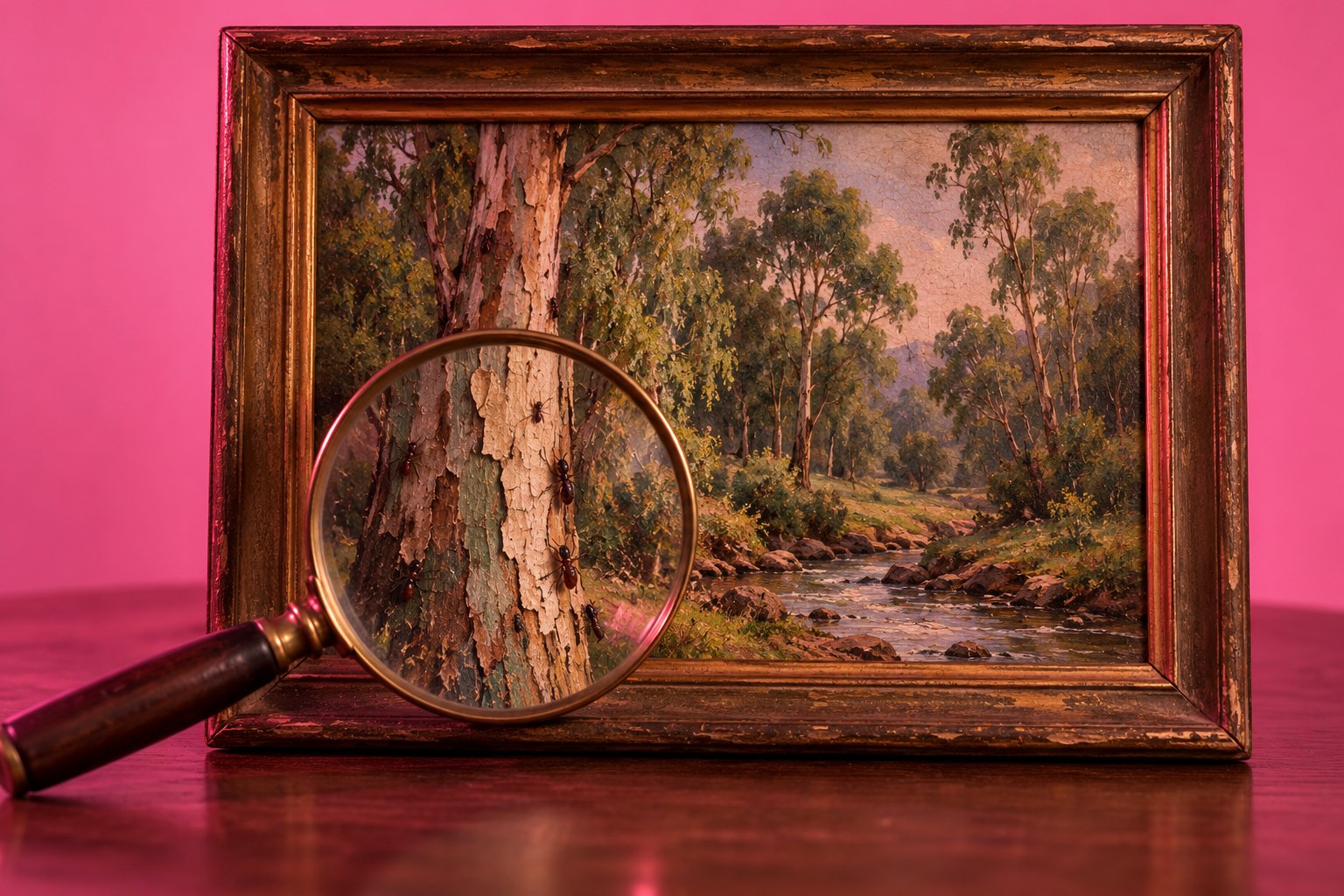
As the title notes, views do deceive, no matter how beautiful they appear from a distance. The body of the view which is the breathtaking landscape does not show what is hidden behind the foliage and what cannot be seen by the eye from so far. Imagine Jewell’s body and appearance as that of the landscape. Her body to me was beautiful but with foolish pride and wrongful treading I found that small and timid body to be deceiving. What I once thought was a fragile Jewell was a headstrong Jewell, one that did not speak her feelings and thus, let me tread towards her.
The Heart of the View
The heart of the view in illustration is Jewell’s character and emotional strength. For so long I thought I knew Jewell and in truth I did know her but her heart did deceive me with her not sharing feelings. Thus, I with curiosity walked towards the view I found so attractive only to find a closer look wasn’t what I had expected. Being so close to her heart had intimidated and frightened her to the point where she had withered to my liking. However, enough about the title, let us now to the Sonnet…
A Cynical Approach to Beauty
The whole Sonnet works around a pessimistic approach towards a curiosity of the mind. It also bases itself upon a sarcasm as a result of my already having experienced a view and having failed to see the beauty once within. Thus, I am being cynical and contradictory when I say that I would love a person if they were just like a beautiful view (1.1). As on the outside and from a distance, a beautiful view is a beautiful view but who knows what creatures crawl once closer or what shades deter.
The second line demonstrates me sensation of déjà vu. The confusion is no longer based on ‘If you were a view’ but now I am saying ‘You have been a view or I have had a view’. The use of ‘Past demise’ (1.2) indicates the distortion of the view as it had happened in a dying of my past years, the lost years. The only true beautifying that is spoken in the Sonnet is made from a distance.
The tallest trees and the thickest grove shows the infatuation that I had with such beauty that I adorn it in such a nature (1.3). Not only was there life in this view but the vivacity stemmed to the water and brooks of the view that did sweeten the sprouting trees and groves. Thus, Jewell’s beauty and sweet gentleness in nurturing was what attracted me most.
The Second Quatrain
The second quatrain begins to broaden the skepticism and the cynical approach that a views beauty is not all that it seems. Bringing out the flaws of what appears to be such beauty from such a curiosity I begin to taint such a picturesque view. Line (1.5) explains how a view is something you can admire from a distance but never touch.
To the beauty of the view I feel ‘betrothed’ and dazzled to know more about it as I was with Jewell. However, my fingers aren’t able to touch those tall trees or caress the brooks full of nourishing water. With this one flaw already pointed out in how a view is deemed untouchable (As Jewell was chaste) it flaws more to give way to obsession.
Continually looking at a view will make you eager to walk to that view, to experience that view. As moments pass (1.6) the only reaching that will be done will not be with hands but with eyes that view a view. Another flaw is shown in that a view does not speak its thoughts or feelings (1.7).
Thus, when I ask the view if she would rather me stay at a distance or stray towards her the view remains without speech. This to me shows accuracy in my relationship between Jewell, where I didn’t know what she was thinking in her mind and she never expressed her feelings towards me. Therefore, as the view has no objections or no inclination to answer I take it upon myself to make a decision. As the view did not answer my much awaited question, my restless feet were tempted to leave the safety of the view (1.8).
Stepping Closer to the Flaws
You will find that with each step closer to a curiosity that looked so beautiful from a distance you will be seeing less of the whole beauty. Once you are in the heart of the beauty you will see all the flaws that you could not see from a distance. Therefore, my fond feet that are eager to find out the truth of the beauty do carelessly taint the beauty with each stride towards it (1.9). The original view was always a safety zone, sort of like a friendship but once you make that decision to know what you are seeing, that is when that safe zone disappears.
I am compelled to walk toward the beauty because of my curiosity and fascination. More importantly I am baited with the premise that the view is beautiful throughout and thus, the view baits me with that premise and not with her encouraging words (1.10). Once within the heart of the view the impurities are finally heeded. My perception of the view was now ruined, much to when Jewell and I broke off our relationship (Both times). The impurities of the view did harm, poison and sunder my perceptions (1.11).
If there was ever a word to describe Jewell it would be ‘Reluctant’. For the whole time we were going out she was reluctant to speak out, to act out or to show her emotions. Thus, reluctant shades ended my perception of a beautiful view once I was there and with that I hoped that I had never become errant to my lust and obsession. The shades that the trees did give were reluctant and the birds did peck the lust out of me once I was there.
Why Love Means Nothing Here
The use of the word ‘Love’ has absolutely no meaning as am speaking of it in a cynical and contradictory way. Thus, when I say that I would surely love someone if they were a view I am speaking of a lustful obsession to find out what is hidden within the foliage of the view.
The last couplet shows in a proverbial manner how views have no flaws except for what the eye can see (1.13). You can have rose-colored glasses when you envision a view from a distance but that reasoning soon changes if you choose to venture forth with lust as your fond feet. Therefore, I was a fool to ever be mistaken with love and to think that such a quiet and reluctant view could be so flawlessly beautiful once in the heart of her. There is no direct use of ‘Lust’ in this Sonnet but it is the dominant subject spoken of.
Puns in the Last Couplet
There is a play on words and a couple of puns in the last couplet I need to enlighten all about. ‘Eye’ is also a pun on the word ‘I’ as there is a play on words to make ‘Love err’ into an equally pronounced ‘Lover’. Thus, if you take out the word ‘The’ in the first sentence and substitute it rightly in the last line you will read ‘In views have no flaws but what I see, how I played the fool to the lover in me’. This obviously would make much more sense.

Diary Of A Mad Chaos is a daily diary written from March 1996 until today, of which individual books and book series have been created, namely “The Lost Years” an exploration of young, entwined love, the “Wubao In China (猎艳奇缘)” book series which provides an extensive comparative analysis of the cultural differences between Eastern and Western societies, and the book titled “Foreigner (华人)” an exploration of race relations in Australia.