

What the Fumbling Sonnet Means
The Sonnet I will now care to explain is the latest ‘Dost thou mock with fumbling atrocities’. The Sonnet is a jovial and amusing look of how the attacked sees the attackers as nothing but jesters and fools trying with humorous atrocities to take what is his.
The heading is the equivalent of me saying “Are you serious, are you trying to defeat me”. The use of ‘Mock’ would show the man’s notion that the attacker is trying to be as great a warrior as himself. Thus, with his clumsy attempts at aggression the man thinks it to be a jest and a mock on how it should be done.
Pity for the Fool
The Sonnet begins with the warrior (Let us think him a Lord) showing pity (1.1) for the man that is trying to lead an attack against him. The use of words of farce nature dwells throughout the Sonnet about the would be aggressor and with words like mock, fumbling, fool, farce and jest, you would consider this man to be some sort of clown at his leading an army. However, the Lord could be so brave as to see his attackers as much more diminutive than himself, thus scorning them with a humorist persona.
The crime (1.1) that the assailant did commit was to attack the Lord and the ‘Fool’ is shown to relent with fear. From this we can understand that the assailant pulled out of his attack prematurely because his men were being slaughtered. Thus, he waived his crime and renounced his men from attack. The use of the archaic form of dare (Being Durst) harbors a tone in the Lord of dominance saying “Do you dare attack me and then pull out of it”.
Wine and Whining
The premise behind the assailants attack was based on postulate thoughts (1.2) assumption without proof. The Lord had been attacked from all sides (As described by the word Beset) but by the tone of the whole Sonnet, unsuccessfully. The Lord pities the fool because he assumed with a cloud over proof that he had done something wrong. Thus, the fool tried to take the Lord for granted with an attack.
Line (1.3) used a pun of words with the use of ‘Whine’. This line would indicate with the same result of using the pun ‘wine’ or the original ‘whine’ that the fool indulged in his detesting of the Lord. Before he began the battle he was proud in his ways and defiant in a sense.
The postulate thoughts kept his proud drinking going but with the loss of his battle against the Lord the whine and indulgence in hypocrisy became bitter. Also, the postulate whining he done about the Lord before the battle had turned into a different whining altogether after his defeat. Before the battle when the fool whined proudly but now with his defeat the whining has turned bitter. His words turned from “I’m going to attack you because you’re no good” to “I can’t believe you attacked me in such a manner”.
The pun about wine and whining has been extended into line (1.4) with the use of the words ‘soused’ and ‘gluttony’. Because of the fool’s detesting nature towards the lord with his whining he immersed himself in headstrong travels in search of adventure and the craving to taste that victory led him to become defiant. Just like in a drunken haze due to his drinking wine in all emotions he drowned himself in this craved search for adventure. The fools drunken state of affairs would make sense of why his battles were so much like a farce comedy.
Mercy in the Second Quatrain
The second quatrain changes from a contemplation of the assailant being a fool and a clown to his furthering pity and mercy for the man who in the Lords hand had seen his armies slain. Carrying on the pun of wine further still (1.5), the Lord speaks “Do not drink yourself into submission and do not continue your vigilant whining. Do not tone down your objection of me or try to wash it from your thoughts”.
Rather, the Lord speaks “Mercy be with you and pray thee for mercy on the battlefield” as he knows during the battle that he has defeated him terribly. The fool is seen as being ‘ignoble’ (1.6) a man without honor and in his hands (Walking into his trap) he shall make the fool’s attack look like a play of ridiculous happenings. The Lord shall also kill off the assailant’s army of absurdity with haste as he knows their humorous fighting is no match for him. The Lord will make the fool seem ignorant and worthless with his vainglorious and boastful attack (1.7).
The Lord placed the fools attack into remission despite the fools hasty retreat after a jesting encounter. In other words, the Lord made the attack seem stupid and idiotic, a waste of his boastful time. The Lord sees the fool’s attack on him as misfortunate (1.8) and this line depicts how he sees the fool’s falling men as more ashes for misfortune’s urn where ‘Urn’ represents death.
The Lord is just saying “Each time you attack me you will be increasing your misfortune with the death of your men”. However, the Lord shows pitiable favor by saying “But if you get faith out of these attacks and you think you can one day diminish and defeat me, go so ahead”. There is a pun on the words ‘Urn’ and ‘Earn’ in which if the words were swapped it would signify that the fool was earning more misfortune with his attacks while defeating and killing his faith.
Sheep and Lions
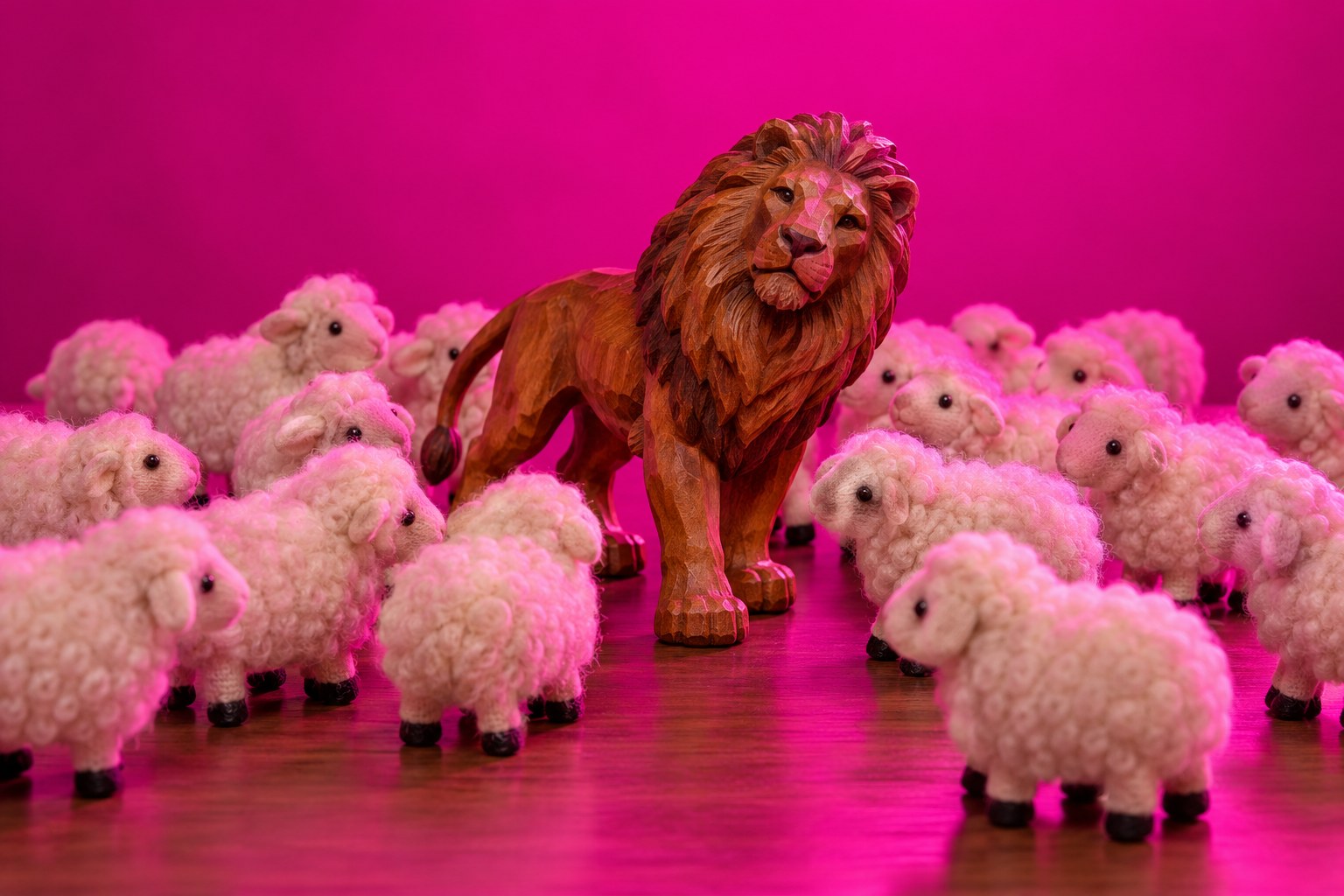
The third quatrain speaks of the assault and the enormous but jovial losses. In this quatrain the Lord speaks of how the fool’s army was like a million sheep and a couple of lions who were doomed and diminutive next to the Lord. The words ‘Curb’ and ‘Count’ would make better sense swapped and it is a quibble on the direction of the Sonnet.
The Lord in line (1.9) is commenting to the fool that he should have better control and direction over the lions he sends out into battle and that he should consider better using the useless men. The warriors are seen as ‘Lions’ (1.10) and the lesser men that make the assailant look like a fool and hinder the warriors in doing their job are considered sheep. Just picture the sheep in their millions charging carelessly at the enemy and then picture five lions trying to do the same within that stampede. The lions are unlucky and considered as doomed as the sheep in their besetting.
As harmless as the sheep are considered, so too are the lions amongst them who are tossed around within the assail. The warriors and attacking men just like the fool are seen as a bragging lot with false hope of victory (1.11).
The use of ‘Brood’ considers all the sheep to be just like little hatchlings who are still young and to be brought up together and with little knowledge of battle. Those that are not in the know-how are usually the one’s who brag where as true warriors are more humble. As sheep are penned in fences, the Lord sees them as a straightforward victory where he can round them up and have them restrained.
There is a pun on the use of raillery as it can be seen as teasing the braggart by capturing and defeating them and then the play of words that would have them behind ‘Rail fences’ as if trapped. Thus, the assailant can whine and the sheepish men can brag but in the end, they will be part of the Lord’s good humored ridicule where he makes fun of their bragging claims that they were ten times the man that the he was.
As the Lord does slaughter the harmless assailants he shows off the fools loss of reputation by keeping the paws of the lions (1.12). In this the Lord either takes what the fool considered to be his best warriors hostage or he has killed them and taken their heads for his reputation.
Jesters at the Last Couplet
The last couplet speaks how the Lord thinks in a humorous tone that the fool was better at whining and insulting him than trying to attack him with a circus of fools and jesters. Back in the medieval days, fools and jesters used to entertain the Kings and Queens and the Lord had seen this attacker as doing just that. The warriors were not seen as such but just another humorous act in front of him.
Therefore, the Lord with his ‘Farce haste’ joined in the comical performance and put an end to the amusing melee. The Lord is truly seen as a Kingly figure with the illustration that the fool was trying to weaken his crown with jesters. Laughter was the fool’s attempt to conquer but one that did not work for the fool. Words and wit in which a fool or jester best displays is what the Lord thinks the assailant was best at, bragging and whining.
Puns Are My New Fad
Here now, as the time reaches 7:15 a.m. I spend another unredeemable late night. Within the early hours of tonight I did hope that sleep would come early to me but once I had written this Sonnet I knew that it wasn’t possible. Nevertheless, before I get myself to sleep here tonight let me introduce the new Sonnet and then get myself some shut eye in preparation for my next big work.
It seems that puns, play of words and alliteration have become my new fad in poetry. Back in the day it was lengthening words to make them seem archaic like ‘Sayeth’ and ‘taketh’ but these days I tend to steer clear from them. I tried to include these archaic forms into my latest Sonnet but it just didn’t happen.
Each Sonnet celebrates a new word found and sometimes I’m astounded by the way in which I find my new words. Some of the times (Like the word ‘Brier’) I come across a word by mistake or from just wording out something and then when I look it up in the dictionary it fits perfectly with what I’m trying to get across. Anyway, let the new Sonnet be heard and when I speak next in this Diary is when I will elaborate…
The New Sonnet
How beguiled disdain sways a King’s regard
Hear me speak, for what braver fire doth sear,
I do, alike thorns with this sharp wit speak,
Whereas wounds to flesh do bleed one’s brier,
These wounds save not worry the wounded weak,
Fair liege, shackles and chains form truth’s unjust,
That ‘tis the finer morsel of mention,
Hence to Phoebus I shall my back entrust,
And hope he not scorn it with pretension,
If strong word shall not worthy thy resolve,
Then I stand accuséd of disgression,
An poised truth weighs aggrieved but not absolved,
Salve not with resolve but with submission,
If lies to tongues mislead, wherefore is truth,
That I to death without considered proof,

Diary Of A Mad Chaos is a daily diary written from March 1996 until today, of which individual books and book series have been created, namely “The Lost Years” an exploration of young, entwined love, the “Wubao In China (猎艳奇缘)” book series which provides an extensive comparative analysis of the cultural differences between Eastern and Western societies, and the book titled “Foreigner (华人)” an exploration of race relations in Australia.